Stadium Tech and Venue Deals Signal a New Era of Sports Infrastructure
This week’s stadium and venue developments underscore how teams and leagues are using technology, mixed-use real estate, and legal maneuvering to reshape the economics of sports. From IP-based production control rooms to league-wide camera deployments and major development projects, the business model around venues is becoming more connected, data-driven, and commercially expansive.
STADIUM TECHNOLOGY NEWS
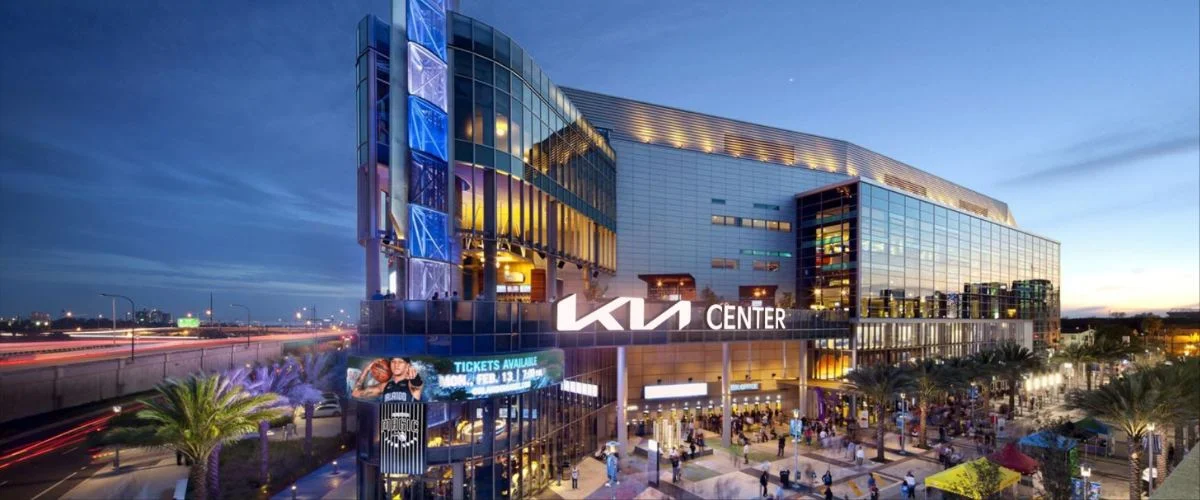
Orlando Magic modernize Kia Center production with ST 2110 IP control room
The Orlando Magic have rolled out a new SMPTE ST 2110 IP-based production control room at Kia Center, replacing legacy broadcast infrastructure with a fully networked workflow built for NBA games, concerts, and in-venue programming. The upgrade reflects a broader shift in venue operations toward flexible, scalable production systems that can support remote workflows, cloud integration, and more efficient content creation across multiple revenue-generating events.
NHL installs league-wide ultra-high-resolution camera network for officiating and content
The NHL has completed a league-wide deployment of Cosm’s C360 Capture Systems, placing four glass-level 10.5K cameras in all 32 arenas to support replay, analytics, and immersive digital content. By linking the camera system with NHL EDGE tracking data, the league is building a unified technology stack that can improve officiating, enhance player-safety monitoring, and create more valuable storytelling assets for media partners and fans.
STADIUM PROJECT NEWS
Texans reveal Toro District as a mixed-use sports and entertainment district
The Houston Texans have unveiled renderings for the Toro District, an 83-acre mixed-use development in northwest Harris County centered on a new headquarters, indoor fieldhouse, and training complex. The project illustrates how teams are increasingly leveraging real estate to build year-round destinations that extend brand engagement beyond game days while opening new streams tied to retail, hospitality, residential, and community development.
Florida clears land transfer for Rays ballpark project
Florida officials have approved a key land transfer that moves the Tampa Bay Rays’ proposed waterfront ballpark closer to reality. The decision removes a major development obstacle and keeps alive a project with significant implications for public infrastructure spending, adjacent mixed-use growth, and the long-term economics of keeping a franchise tied to a specific market.
FIFA supports Gaza stadium rebuild tied to broader recovery plan
FIFA has backed a football-focused reconstruction initiative in Gaza that includes a proposed 20,000-seat national stadium, an academy, five full-size pitches, and 50 community mini-fields. Beyond the sporting value, the plan highlights how stadium and field development can function as a vehicle for economic recovery, workforce activity, and community rebuilding when broader conditions allow construction and operations to resume.
STADIUM BUSINESS NEWS
UCLA stays at the Rose Bowl as stadium dispute continues
UCLA will remain at the Rose Bowl for the 2026 football season while litigation continues over its attempted move to SoFi Stadium. The dispute underscores how long-term venue contracts can shape team mobility, facility economics, and municipal leverage, with the outcome likely to influence future negotiations between schools, cities, and venue operators.
Why It Matters
This week’s stadium and venue developments underscore how teams and leagues are using technology, mixed-use real estate, and legal maneuvering to reshape the economics of sports. From IP-based production control rooms to league-wide camera deployments and major development projects, the business model around venues is becoming more connected, data-driven, and commercially expansive.
Content Package
Stadium tech is leveling up: Orlando’s ST 2110 IP control room, the NHL’s 10.5K camera network, and new venue districts + ballpark wins. Sports infrastructure is shifting to flexible, data-driven workflows.
#StadiumTech#SportsTech#SMPTE2110#IPVideo#SportsBusiness
Sports infrastructure is entering a new era—one where the venue isn’t just a place to play, but a platform for production, data, and year-round business. Here’s what stood out from the latest Stadium Tech Report: 1) Orlando Magic modernize Kia Center with ST 2110 The Orlando Magic have deployed an SMPTE ST 2110 IP-based production control room at Kia Center, replacing legacy broadcast workflows with a fully networked, flexible system. That matters because it supports faster content creation across NBA games, concerts, and in-venue programming—and it opens the door to remote and cloud-enabled production models. 2) NHL scales ultra-high-resolution for officiating + immersive content The NHL’s league-wide rollout of Cosm’s C360 Capture Systems brings four glass-level 10.5K cameras to all 32 arenas. By connecting the camera network with NHL EDGE tracking data, the league is building a unified technology stack that can improve officiating, strengthen player-safety monitoring, and elevate storytelling for media partners and fans. 3) Venue development trends: mixed-use districts and “stadium as a destination” The Houston Texans’ Toro District concept (83 acres) reinforces how teams are using real estate to extend brand engagement beyond game day—adding year-round retail, hospitality, residential, and community programming. Meanwhile, Florida’s land transfer approval keeps the Tampa Bay Rays’ waterfront ballpark project moving, with major implications for public infrastructure, adjacent mixed-use growth, and long-term franchise economics. 4) Stadiums tied to recovery and community rebuilding FIFA’s support for a Gaza football reconstruction plan—centered around a proposed 20,000-seat national stadium, an academy, multiple pitches, and community mini-fields—highlights how stadium and field development can drive workforce activity and economic recovery when conditions allow. 5) Contract and mobility disputes still shape the business UCLA staying at the Rose Bowl for 2026 while litigation continues over a potential move to SoFi underscores a reality: long-term venue agreements can influence team options, municipal leverage, and future negotiation structures. Bottom line: Whether it’s IP production, ultra-high-res capture, or new development models, the common thread is flexibility—operational, technological, and commercial. The next generation of sports infrastructure will reward organizations that can adapt quickly, monetize consistently, and deliver better experiences on and off the field. What do you think will be the biggest differentiator next: IP-based production workflows, real-time tracking/data integration, or mixed-use revenue ecosystems?
#StadiumTech#SportsTech#SMPTE2110#IPVideo#SportsBusiness
New playbook for stadiums: ST 2110 IP control rooms, 10.5K camera networks, and mixed-use districts + ballpark momentum. Sports infrastructure is going networked + data-driven. #SportsTech #StadiumTech #SMPTE2110 #NHL #NBA #VenueDevelopment #BroadcastEngineering #IPVideo #SportsBusiness
#StadiumTech#SportsTech#SMPTE2110#IPVideo#SportsBusiness
Stadium upgrades are accelerating—on the tech side and the business side. The Orlando Magic modernized Kia Center with an SMPTE ST 2110 IP-based production control room, while the NHL completed a league-wide deployment of ultra-high-resolution cameras tied to tracking data for replay, analytics, and immersive content. Meanwhile, teams and cities are pushing major projects forward: the Texans unveiled plans for the Toro District, Florida cleared a key land transfer for the Rays’ waterfront ballpark, and FIFA backed a Gaza stadium rebuild connected to broader recovery efforts. Even venue disputes, like UCLA’s Rose Bowl situation, show how long-term contracts can shape the economics and mobility of sports. The takeaway: sports facilities are becoming technology platforms—and year-round destinations.
#StadiumTech#SportsTech#SMPTE2110#IPVideo#SportsBusiness
Hook (0-5s): Stadiums aren’t just seats anymore—they’re becoming data + production hubs. Scene 1 (5-15s): Orlando’s Kia Center just upgraded to an SMPTE ST 2110 IP control room—moving from legacy gear to a fully networked workflow built for games, concerts, and faster content creation. Scene 2 (15-25s): In the NHL, Cosm installed 10.5K cameras across all 32 arenas to support officiating, replay, analytics, and immersive fan experiences—powered by tracking data. Scene 3 (25-35s): Off the field: the Texans’ Toro District concept shows how teams are building year-round destinations, while Florida cleared progress on the Rays’ waterfront ballpark. Scene 4 (35-45s): Bottom line: tech + real estate + data integration = a new sports infrastructure era. Which upgrade do you want to see next—better cameras, smarter production, or bigger mixed-use districts?
#StadiumTech#SportsTech#SMPTE2110#IPVideo#SportsBusiness
Stadiums are upgrading fast—and it’s not just about the scoreboard. Orlando’s Kia Center rolled out an SMPTE ST 2110 IP production control room, replacing legacy broadcast setups with a fully networked workflow designed for NBA games, concerts, and in-venue programming. Meanwhile, the NHL completed a league-wide deployment of Cosm’s C360 Capture Systems—four glass-level 10.5K cameras in all 32 arenas. Linked with NHL EDGE tracking data, it supports officiating improvements, player-safety monitoring, and richer replay + immersive content. On the business side: the Texans unveiled Toro District, an 83-acre mixed-use sports and entertainment hub—proof teams want year-round engagement. And Florida cleared a land transfer that moves the Rays’ waterfront ballpark project closer to reality. So the big question: will the next competitive advantage come from production tech, arena data, or the mixed-use “destination” model? (Like + follow for more stadium tech updates.)
#StadiumTech#SportsTech#SMPTE2110#IPVideo#SportsBusiness