How Stadium Tech, Real Estate, and Premium Inventory Are Rewriting the Sports Venue Business
Across stadiums, training complexes, and downtown venue plans, teams and operators are turning physical assets into more efficient, more profitable business platforms. The common thread is a shift from one-time capital projects to long-term revenue engines built around technology, premium experiences, and control of real estate. From connectivity upgrades to public financing battles, the sports venue market is becoming more strategic, more competitive, and more commercial.
Stadium Technology News
Presentation upgrades are becoming an operating advantage at Dignity Health Sports Park
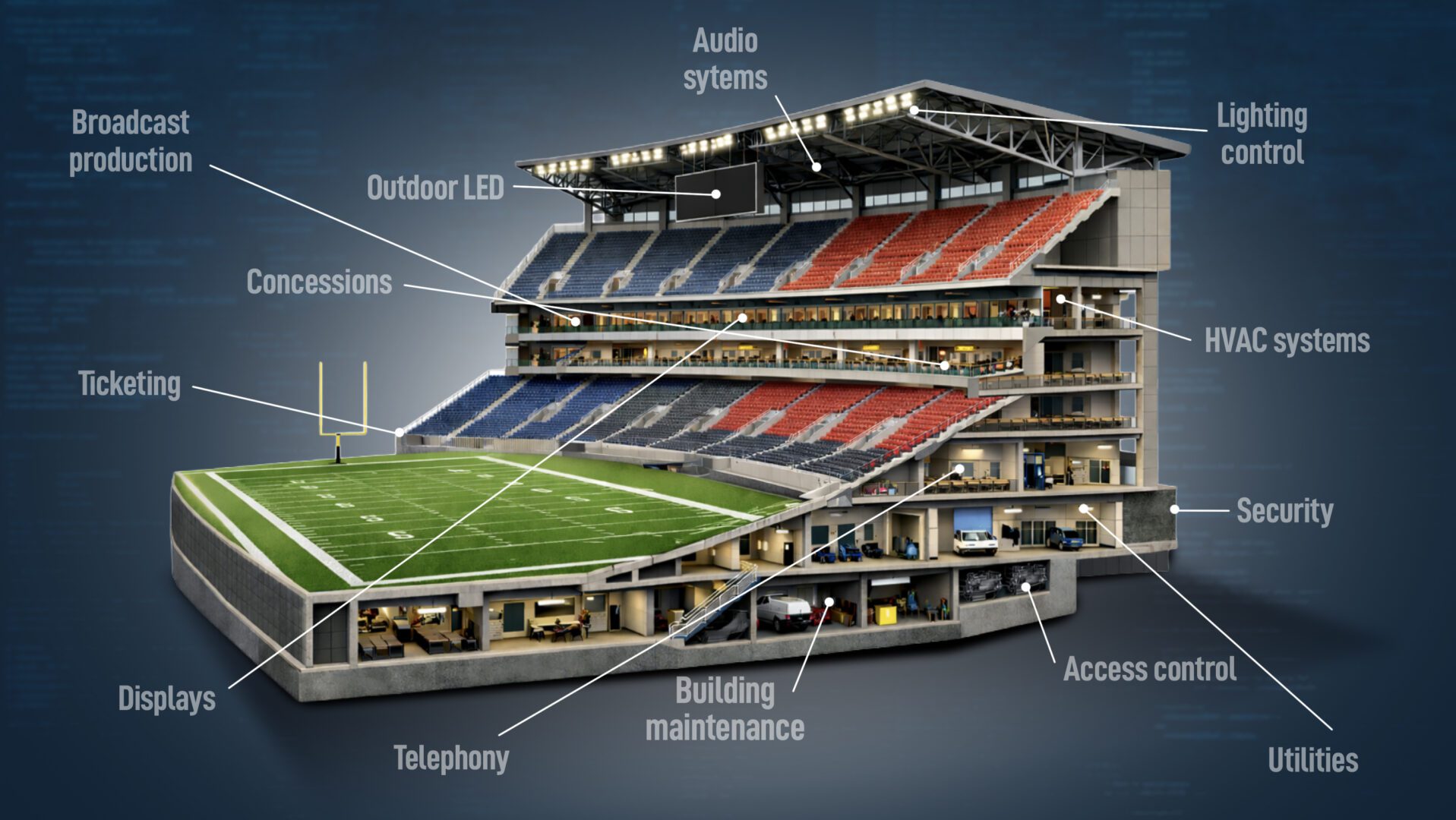
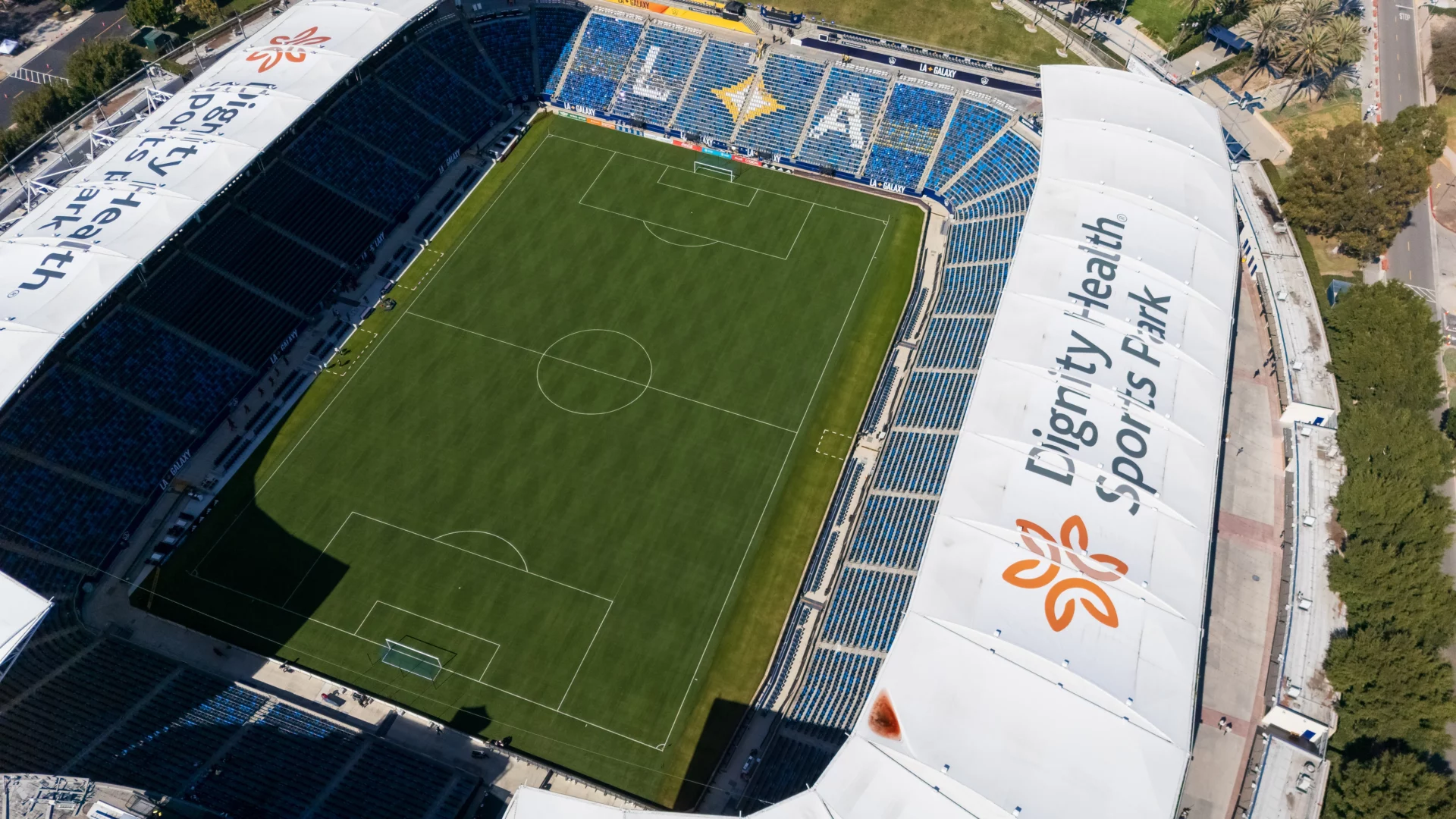
Dignity Health Sports Park has added a higher-resolution north-end LED video board and completed a venue-wide show control upgrade powered by Camino, strengthening matchday presentation for LA Galaxy games and more than 70 annual events. The business case goes beyond better visuals. By improving real-time data delivery, enabling more flexible content zoning, and reusing existing infrastructure, the project lowers waste while improving capital efficiency. For venue operators, that reflects a broader shift: presentation quality is now tied to sustainability, asset management, and long-term operating discipline.
MatSing is attacking the connectivity bottleneck in dense venues
MatSing is preparing to launch its MS-16.16W45 Wi-Fi 6E lens antenna at MWC Barcelona, targeting stadiums and arenas that need stronger connectivity with fewer deployed units. The design is intended to reduce infrastructure density while improving wireless performance, which could lower installation complexity and long-term maintenance costs. As mobile ordering, premium hospitality, and in-venue engagement become more data-intensive, network efficiency is becoming a direct revenue driver rather than a hidden technical expense.
MLB’s automated ball-strike system is changing broadcast and in-venue graphics strategy
Major League Baseball’s Automated Ball-Strike challenge system, set for the 2026 season, will allow pitchers, catchers, and batters to challenge calls using camera-tracked strike-zone technology. The implications extend far beyond officiating. Broadcast graphics and stadium displays are being redesigned to prevent teams from using strike-zone visuals during challenges, showing how rule innovation now affects media production, venue presentation, and data governance. For rights holders and technology vendors, that creates new compliance and integration demands.
Stadium Project News
Indiana’s stadium push is raising the competitive pressure around the Chicago Bears
Indiana lawmakers have advanced legislation to create a stadium authority that could finance and build a new NFL venue near Hammond, intensifying regional competition for the Chicago Bears. The move is more than symbolic. It is a public-sector strategy to use infrastructure, financing tools, and site control to attract a major sports asset. For Chicago, the development underscores how stadium economics and franchise leverage are increasingly shaped by aggressive state-level competition.
The Mets are using a $60 million player development complex to lock in long-term value
The New York Mets have broken ground on a 55,000-square-foot player development complex in Port St. Lucie, a roughly $60 million project designed to modernize training, recovery, and development operations. Set to open for 2027 Spring Training, the facility will replace aging infrastructure and aligns with a lease extension that could keep the club’s Florida base in place through 2052. The project shows how teams are using real estate not only to improve performance, but also to secure operational continuity and build asset value over decades.
Medellín is betting on stadium redevelopment as an economic development tool
Medellín has approved a US$205 million overhaul of Atanasio Girardot Stadium, a 1953 venue that is set to become one of Latin America’s most modern sports facilities. The plan includes a full roof, expanded hospitality, infrastructure upgrades, and a capacity increase approaching 60,000 seats, positioning the venue for larger events and broader economic impact. The redevelopment reflects a familiar but increasingly sophisticated strategy: using stadium investment to drive urban branding, tourism, and event-market positioning at the same time.
Stadium Business News
Kansas is converting Allen Fieldhouse into a year-round premium asset
The University of Kansas and Oak View Group will open the members-only Naismith Club inside Allen Fieldhouse in summer 2026, extending the building’s value proposition beyond game days. With dining, lounge, and event space, the concept is designed to create year-round engagement while strengthening ties to alumni, donors, and premium fans. The broader business signal is clear: historic venues are being repackaged as recurring hospitality assets rather than single-purpose sports buildings.
Chicago Fire FC is building demand before its new stadium even opens
Chicago Fire FC has opened a $6 million stadium experience center designed to sell premium seating, hospitality packages, and technology-driven concepts tied to its planned 22,000-seat downtown venue. The center serves as a commercial preview space, allowing fans and corporate buyers to explore suites, memberships, and matchday experiences before the stadium is even built. In effect, the club is monetizing anticipation by converting future inventory into immediate demand and accelerating revenue generation ahead of opening day.
LAFC and Inter Miami are showing how MLS can scale into event economics
LAFC’s February 22, 2026 match against Inter Miami at the Los Angeles Memorial Coliseum drew 75,673 fans, the second-largest crowd in MLS history. The attendance figure reinforces the league’s ability to turn marquee fixtures into major-event properties when star power, destination appeal, and venue scale align. For MLS clubs, the message is that the business model is expanding beyond traditional soccer attendance and into the economics of event programming.
Why It Matters
Across stadiums, training complexes, and downtown venue plans, teams and operators are turning physical assets into more efficient, more profitable business platforms. The common thread is a shift from one-time capital projects to long-term revenue engines built around technology, premium experiences, and control of real estate. From connectivity upgrades to public financing battles, the sports venue market is becoming more strategic, more competitive, and more commercial.
Content Package
Stadium playbook is shifting: higher-res LED + show control for better matchday, Wi‑Fi 6E to cut network chaos, and MLB’s automated strike tech forcing new broadcast graphics. Tech + data + sustainability = premium experiences.
#StadiumTech#SportsBusiness#FanExperience#WiFi6E#LEDVideo#VenueOperations#SportsInnovation
Sports venues are moving from “upgrade the building” to “upgrade the system”—and the business case is getting clearer. Across Stadium Tech Report’s latest updates, three themes stand out: 1) Production value is becoming an asset-management strategy Dignity Health Sports Park’s higher-resolution north-end LED board and venue-wide Show Control upgrade (powered by Camino) isn’t just about prettier visuals. It’s tied to improved real-time data display, flexible content zoning, and reuse of existing infrastructure to reduce waste and capital inefficiency. The message: sustainability and presentation are increasingly linked. 2) Connectivity is shifting from back-of-house to revenue infrastructure MatSing’s upcoming Wi‑Fi 6E lens antenna targets dense venues with more capacity using fewer deployed units—designed to lower installation density and long-term maintenance complexity. As mobile ordering, in-venue engagement, and premium hospitality rely on reliable connectivity, network efficiency is becoming a business lever, not a technical footnote. 3) Rule innovation is rewriting broadcast + display requirements MLB’s Automated Ball-Strike challenge system for 2026 will require redesigns to prevent teams from exploiting strike-zone visuals during challenges. That ripple effect matters: it touches media production, in-stadium displays, and data governance—creating new requirements for rights holders and technology partners. Meanwhile, stadium economics are evolving on the project and business sides: • Public-sector competition is intensifying (Indiana’s stadium authority push to attract the Bears) • Player performance and long-term asset value are being engineered through real estate (Mets’ ~$60M development complex) • Cities are using redevelopment as urban branding and tourism strategy (Medellín’s $205M Atanasio Girardot overhaul) • Premium experiences are being monetized year-round (Kansas’ Naismith Club inside Allen Fieldhouse) • Clubs are selling “future inventory” today (Chicago Fire FC’s $6M sales experience center) • Event economics are scaling with destination appeal and marquee matchups (LAFC vs. Inter Miami at 75,673) Bottom line: stadiums that win next won’t just build bigger—they’ll build smarter systems that connect technology, operations, sustainability, and monetization into one cohesive playbook. What’s your biggest question: connectivity, content/show control, or data governance for new rule-driven broadcasts?
#StadiumTech#SportsBusiness#FanExperience#WiFi6E#LEDVideo#VenueOperations#SportsInnovation
Stadiums are upgrading the whole “matchday stack” 🔥 LED + show control, Wi‑Fi 6E capacity, and new rule tech reshaping displays & broadcasts. Premium experiences aren’t just seats—they’re systems. #StadiumTech #SportsBusiness #WiFi6E #LEDVideo #VenueOperations #FanExperience #SportsInnovation #BroadcastTech
#StadiumTech#SportsBusiness#FanExperience#WiFi6E#LEDVideo#VenueOperations#SportsInnovation
From upgraded LED and show control to Wi‑Fi 6E network improvements, venues are rethinking the matchday experience as a connected, data-driven system. MLB’s automated ball-strike challenge is also pushing changes in broadcast graphics and in-stadium displays—showing how rule innovation impacts media and technology. On the business side, stadium redevelopment, premium hospitality expansions, and early sales “preview centers” highlight a broader trend: stadium value is being built year-round, with tech and operations working together to drive revenue and sustainability.
#StadiumTech#SportsBusiness#FanExperience#WiFi6E#LEDVideo#VenueOperations#SportsInnovation
Hook (0-5s): Stadiums aren’t just getting bigger… they’re getting smarter. Scene 1 (5-15s): LA Galaxy’s home upgraded its north-end LED and show control—better visuals, but also more efficient operations. Reusing infrastructure, reducing waste. Scene 2 (15-25s): Next: Wi‑Fi 6E. A lens antenna for dense venues means more capacity with fewer units—built for mobile ordering and premium hospitality. Scene 3 (25-35s): MLB’s automated ball-strike challenges are forcing broadcast + display redesigns. Rules now affect what fans see—and how teams can’t game visuals. Scene 4 (35-45s): Final takeaway: Tech + data + sustainability = the new playbook. If you’re a venue operator, connectivity and content control are revenue tools now. Close (45s): What upgrade would you tackle first—LED/show control, Wi‑Fi, or data/display governance?
#StadiumTech#SportsBusiness#FanExperience#WiFi6E#LEDVideo#VenueOperations#SportsInnovation
Stadiums are entering a new era—here’s what’s changing in under a minute. 1) Better matchday visuals, smarter operations: Dignity Health Sports Park upgraded its higher-resolution LED board and venue-wide show control—improving real-time data displays and content zoning while reusing existing infrastructure to cut waste. 2) Wi‑Fi is becoming core infrastructure: MatSing’s upcoming Wi‑Fi 6E lens antenna targets dense stadiums with more capacity using fewer deployed units—helping reduce installation complexity and support data-heavy fan experiences. 3) Rule tech reshapes the screen: MLB’s automated ball-strike challenges for 2026 will require redesigns to prevent exploitation of strike-zone visuals—impacting both broadcast graphics and in-stadium displays. The big takeaway: premium experiences aren’t just seats—they’re systems. Tech and sustainability are now tied to asset strategy. Question for you: which of these matters most for your venue—connectivity, content control, or data governance?
#StadiumTech#SportsBusiness#FanExperience#WiFi6E#LEDVideo#VenueOperations#SportsInnovation
Stadium playbooks are shifting fast: higher-res LED + show control upgrades for sustainability, Wi‑Fi 6E for dense connectivity, and MLB’s automated strike-zone changing broadcast rules. Meanwhile, stadium authorities and premium inventory are reshaping leverage.
#StadiumTech#SportsBusiness#VenueInnovation#WiFi6E#SportsMarketing#StadiumDevelopment
Sports venues are entering a new era where technology, real estate strategy, and premium inventory are tightly linked—turning matchday operations into long-term business assets. Here are the biggest signals from the Stadium Tech Report: 1) Production quality meets sustainability and asset discipline Dignity Health Sports Park upgraded its north-end LED board and completed a venue-wide show control refresh powered by Camino. The business case isn’t just “brighter visuals.” It improves real-time data presentation, allows more flexible content zoning, and reuses existing infrastructure to reduce waste and capital inefficiency. The takeaway: presentation is becoming an operational and sustainability lever, not a standalone creative upgrade. 2) Network efficiency is moving from cost center to revenue driver MatSing’s upcoming Wi‑Fi 6E lens antenna design targets dense venues with fewer units, aiming to reduce installation complexity and long-term maintenance. As mobile ordering, premium hospitality, and in-venue engagement grow more data-intensive, connectivity performance increasingly impacts conversion, dwell time, and customer experience. 3) Rule innovation is forcing media + venue display redesign MLB’s Automated Ball‑Strike challenge system (2026) will use camera-tracked strike-zone tech. Expect knock-on effects for broadcast graphics and in-venue displays—teams will need compliance controls so strike-zone visuals can’t be used during challenges. That’s a governance and integration story as much as a tech story. 4) Stadium economics are intensifying at the state and franchise level Indiana’s stadium authority legislation raises the competitive stakes in the race for the Chicago Bears—using public-sector financing tools and site control to attract major assets. This reflects a broader trend: franchise leverage is increasingly shaped by aggressive state-level competition. 5) Real estate investment is now about continuity and asset value over decades The Mets’ $60M player development complex (opening 2027) isn’t only about performance—it replaces aging infrastructure and aligns with a lease extension that could keep the club’s Florida base through 2052. Similarly, Medellín’s $205M Atanasio Girardot redevelopment (full roof, expanded hospitality, near-60K capacity) shows how stadium investment is used for urban branding, tourism, and event-market positioning. 6) Premium inventory is being monetized early—and year-round Kansas and Oak View Group’s Naismith Club inside Allen Fieldhouse (summer 2026) turns a historic venue into a recurring hospitality destination. Chicago Fire FC’s $6M stadium experience center is another forward-leaning move: selling premium seating and hospitality concepts before the new stadium opens. 7) Event economics are scaling with venue + star power LAFC vs. Inter Miami drew 75,673 at the LA Coliseum—one of MLS’s largest crowds—reinforcing that marquee matchups can behave like major-event properties. What this all adds up to The “venue playbook” is being rewritten: technology upgrades are being justified by operational efficiency and sustainability, connectivity is becoming a commercial enabler, and real estate/premium inventory strategies are transforming stadiums into durable, multi-year platforms. The question for operators and rights holders: are your systems designed for compliance, scalability, and long-term asset value—or optimized for today’s game only?
#StadiumTech#SportsBusiness#VenueInnovation#WiFi6E#SportsMarketing#StadiumDevelopment
Stadiums are evolving fast: brighter + smarter show control, Wi‑Fi 6E built for dense crowds, and MLB’s automated strike-zone changing what fans (and broadcasts) can see. Plus: new stadium authorities, premium clubs, and real estate that drives value for decades. ⚡🏟️ #StadiumTech #SportsBusiness #VenueInnovation #WiFi6E #LEDVideoWall #SportsMedia #StadiumDevelopment #PremiumHospitality #MLS #MLB #NFL
#StadiumTech#SportsBusiness#VenueInnovation#WiFi6E#SportsMarketing#StadiumDevelopment
From upgraded LED and show control systems to Wi‑Fi 6E connectivity and MLB’s automated ball-strike tech, stadium innovation is reshaping fan experience and operations. Meanwhile, stadium authorities, major redevelopment budgets, and premium inventory strategies show how real estate and hospitality are becoming key to long-term leverage and revenue. What’s the biggest change you’re watching this year?
#StadiumTech#SportsBusiness#VenueInnovation#WiFi6E#SportsMarketing#StadiumDevelopment
In the next few years, stadiums won’t just look better—they’ll operate smarter. Example one: Dignity Health Sports Park upgraded its LED and show control to improve real-time data and content zoning—while reusing infrastructure to cut waste. Example two: Wi‑Fi 6E is coming to dense venues. Better network efficiency means faster mobile ordering and more reliable premium experiences. Example three: MLB’s automated ball-strike challenges are forcing redesigns for broadcast and in-venue displays—because data governance matters now. And off the field? Stadium economics are getting more aggressive: stadium authorities, $60M player development investments, and premium clubs that turn venues into year-round destinations. So the question is: Is your venue built for matchday—or built for the next decade?
#StadiumTech#SportsBusiness#VenueInnovation#WiFi6E#SportsMarketing#StadiumDevelopment
Stadiums are rewriting the playbook—and here are 5 quick moves: 1) Tech upgrades tied to sustainability: Dignity Health Sports Park improved LED presentation and show control, using smarter zoning and reusing infrastructure. 2) Wi‑Fi 6E for dense crowds: MatSing’s antenna design aims to boost performance with fewer units—lower install and maintenance complexity. 3) Rules impact the screen: MLB’s automated ball-strike challenges mean broadcast graphics and in-venue displays must change for compliance. 4) Stadium leverage is escalating: Indiana’s stadium authority push could reshape the Chicago Bears race. 5) Real estate becomes the engine: Mets’ $60M development complex and year-round premium concepts like Kansas’ Naismith Club show venues are now multi-decade assets. Which one matters most to you—network, media graphics, or real estate?
#StadiumTech#SportsBusiness#VenueInnovation#WiFi6E#SportsMarketing#StadiumDevelopment
Stadiums are evolving from “bigger screens” to operating advantages: LED + show control upgrades for sustainability, Wi‑Fi 6E to cut network bottlenecks, and real estate moves that lock in long-term value. The new playbook is premium + data + discipline.
#StadiumTech#SportsBusiness#VenueInnovation#WiFi6E#PremiumHospitality#SportsRealEstate#FanExperience#SportsTechnology
Stadium Tech Report shows a clear throughline: today’s venue winners are tying presentation, connectivity, and real estate strategy to long-term operating discipline. 1) Presentation upgrades are becoming sustainability and asset-efficiency plays Dignity Health Sports Park’s higher-resolution north-end LED board and venue-wide show control upgrade (powered by Camino) don’t just improve visuals—they strengthen real-time data delivery, enable more flexible content zoning, and reuse existing infrastructure to reduce waste and improve capital efficiency. In other words, matchday “wow” is now linked to sustainability and smarter asset management. 2) Network efficiency is shifting from hidden cost to revenue driver MatSing’s MS-16.16W45 Wi‑Fi 6E lens antenna targets dense-venue connectivity bottlenecks with stronger performance using fewer deployed units. As mobile ordering, premium hospitality, and in-venue engagement become more data-intensive, connectivity is increasingly a direct commercial lever—not merely a technical requirement. 3) Rule innovation is forcing new data governance and media compliance MLB’s automated ball-strike challenge system (2026) will reshape how broadcasts and stadium graphics handle strike-zone visuals. Rights holders and technology vendors will need new compliance and integration workflows—proof that sports tech is now tightly coupled with governance. 4) Stadium economics are intensifying via state-level competition Indiana’s potential new stadium authority near Hammond increases competitive pressure around the Chicago Bears. This reflects a broader trend: infrastructure financing tools and site control are being used more aggressively to attract major franchises. 5) Real estate is being used to secure operational continuity for decades The Mets’ ~$60M player development complex (opening 2027 Spring Training) modernizes training and recovery while aligning with a lease extension that could keep the Florida base through 2052. Teams are treating facilities as long-duration operational assets—not just performance upgrades. 6) Premium inventory and “year-round” venue repackaging are accelerating The Naismith Club at Allen Fieldhouse (opening summer 2026) turns a historic arena into a recurring hospitality engine. Similarly, Chicago Fire FC’s $6M experience center sells premium and technology-driven concepts ahead of its new stadium—monetizing anticipation and reducing time-to-demand. 7) MLS is scaling into broader event economics LAFC vs Inter Miami at the Coliseum (75,673) reinforces that marquee fixtures can function like major-event properties. The business model is expanding beyond traditional match attendance into event programming and venue economics. Bottom line: Stadium tech, premium inventory, and real estate are converging. The next competitive edge won’t be just bigger venues—it will be smarter operations, cleaner infrastructure decisions, and data-driven presentation that supports revenue across the full year. What are you seeing in your market: presentation tech, connectivity, or real estate strategy leading the charge?
#StadiumTech#SportsBusiness#VenueInnovation#WiFi6E#PremiumHospitality#SportsRealEstate#FanExperience#SportsTechnology
Stadiums are leveling up: smarter show control for better efficiency, Wi‑Fi 6E for fewer installs, and real estate built for decades of value. Premium inventory is going year‑round—data is the new MVP. #StadiumTech #SportsBusiness #VenueInnovation #WiFi6E #PremiumHospitality #StadiumOperations #SportsRealEstate #FanExperience
#StadiumTech#SportsBusiness#VenueInnovation#WiFi6E#PremiumHospitality#SportsRealEstate#FanExperience#SportsTechnology
From LED upgrades and show control to Wi‑Fi 6E connectivity and new real estate strategies, sports venues are being redesigned for long-term operating value. The latest Stadium Tech Report highlights how technology and premium inventory now connect to sustainability, revenue, and governance—not just game-day presentation. Which upgrade matters most in your market: tech, hospitality, or stadium development?
#StadiumTech#SportsBusiness#VenueInnovation#WiFi6E#PremiumHospitality#SportsRealEstate#FanExperience#SportsTechnology
In 40 seconds, here’s why stadiums are changing fast. 1) Dignity Health Sports Park is upgrading LEDs + show control—not just for “prettier visuals,” but for better real-time data and more efficient use of existing infrastructure. 2) MatSing is targeting dense-venue Wi‑Fi problems with Wi‑Fi 6E lens antennas—fewer units, less installation complexity. 3) MLB’s automated ball-strike challenges (2026) will force new graphics + broadcast rules—data governance is now part of the production. 4) Teams and cities are betting on real estate: the Mets’ development complex and major stadium redevelopments show venues are becoming multi-decade operational assets. So the new stadium playbook? Tech + premium inventory + disciplined infrastructure. Would you rather see better connectivity, better presentation, or better premium spaces first?
#StadiumTech#SportsBusiness#VenueInnovation#WiFi6E#PremiumHospitality#SportsRealEstate#FanExperience#SportsTechnology
Stadiums aren’t just getting bigger—they’re getting smarter. Here are 5 moves reshaping the sports venue business: 1) LED + show control upgrades at Dignity Health Sports Park improve presentation while boosting efficiency and reducing waste. 2) Wi‑Fi 6E from MatSing targets the connectivity bottleneck in dense arenas—meaning smoother fan experiences and lower long-term maintenance. 3) MLB’s automated ball-strike challenges will change broadcast and in-venue graphics, adding new compliance and data governance demands. 4) Stadium competition is intensifying at the state level, like Indiana’s push that could increase leverage around the Chicago Bears. 5) Real estate is turning into long-term value—teams are building training and hospitality assets designed to last for decades. The takeaway: presentation, connectivity, and real estate are converging into one strategy—premium + data + operational discipline. Which one do you think matters most: tech, connectivity, or premium inventory?
#StadiumTech#SportsBusiness#VenueInnovation#WiFi6E#PremiumHospitality#SportsRealEstate#FanExperience#SportsTechnology
Stadiums are evolving fast: smarter LED + show control (LA Galaxy), Wi‑Fi 6E built for dense venues (MatSing), and MLB’s automated strike zone forcing new broadcast/display rules. Tech + real estate + premium inventory = the new playbook.
#StadiumTech#SportsVenue#FanExperience
Stadium Tech, Real Estate, and Premium Inventory Are Redefining the Sports Venue Business From matchday presentation to long-term asset strategy, the venue business is shifting from “build and operate” to “design, monetize, and govern.” Here are the clearest signals from this week’s Stadium Tech Report. 1) Technology is becoming a sustainability + operations strategy Dignity Health Sports Park’s upgrade—higher-resolution north-end LED plus a venue-wide show control system powered by Camino—shows how production quality is increasingly tied to efficiency. Better visuals matter, but the bigger story is what the stack enables: real-time data delivery, more flexible content zoning, and reuse of existing infrastructure to reduce waste and capital inefficiency. 2) Network efficiency is moving from back-of-house to revenue driver MatSing’s upcoming Wi‑Fi 6E lens antenna (MWC Barcelona) targets dense stadium environments with fewer deployed units. That’s critical as mobile ordering, premium hospitality, and in-venue engagement become more data-intensive. In other words: connectivity isn’t just a technical requirement—it’s now part of the fan experience and the business model. 3) Rule innovation is reshaping broadcast graphics and venue displays MLB’s Automated Ball-Strike challenge system (2026) will require redesigns in how strike-zone information is displayed and managed. Teams can’t rely on strike-zone visuals during challenges—meaning new compliance, integration, and data governance requirements for rights holders and vendors. 4) Stadium economics are increasingly shaped by state-level competition Indiana’s stadium authority legislation could intensify the race for the Chicago Bears, highlighting how site control, financing tools, and infrastructure policy are becoming franchise leverage. Stadium economics are no longer only local—they’re competitive at the state level. 5) Real estate is being used to secure operational continuity for decades The Mets’ $60M player development complex (opening 2027) and lease extension plans through 2052 underscore a broader trend: teams are investing in facilities that improve performance today while building long-term operational stability and asset value. 6) Redevelopment is turning venues into urban branding engines Medellín’s $205M overhaul of Atanasio Girardot Stadium—roof expansion, hospitality growth, and capacity nearing 60,000—illustrates how modern stadium projects aim to drive tourism, event-market positioning, and city identity, not just ticket sales. 7) Premium inventory is shifting from “game-day product” to recurring hospitality asset Kansas and Oak View Group’s Naismith Club inside Allen Fieldhouse (summer 2026) repackages a historic venue into a year-round destination. Meanwhile, Chicago Fire FC’s $6M experience center monetizes anticipation by selling premium seating and hospitality before the new stadium opens. 8) Event economics are expanding beyond traditional attendance LAFC’s Inter Miami match (75,673 fans) reinforces that marquee fixtures can become major-event properties when star power, venue scale, and destination appeal align—pushing MLS business models further into event programming economics. Bottom line: The next generation of sports venues will be defined by integrated tech stacks, disciplined long-term operations, and premium inventory strategies designed to monetize every moment—on game day and beyond. — Stadium Tech Report
#StadiumTech#SportsVenue#FanExperience
Stadiums aren’t just getting bigger—they’re getting smarter. LED + show control upgrades, Wi‑Fi 6E for dense crowds, and MLB’s automated strike zone reshaping displays. Plus: new stadium authorities, premium clubs, and redevelopment booms. 📡🏟️✨ #StadiumTech #SportsBusiness #VenueInnovation #WiFi6E #LED #FanExperience #SportsAnalytics #BroadcastTech #MLS #NFL #MLB #RealEstate
#StadiumTech#SportsVenue#FanExperience
This week’s Stadium Tech Report highlights how today’s sports venues are being redesigned across three fronts: technology, real estate, and premium inventory. • LA Galaxy’s home upgrades: higher-res LED and a modern show control stack to improve presentation and operational efficiency. • MatSing’s Wi‑Fi 6E antenna concept aims to boost connectivity in dense venues with less infrastructure. • MLB’s Automated Ball-Strike challenge system (2026) will change how stadium displays and broadcast graphics handle strike-zone information. On the business side: Indiana is moving toward a stadium authority that could raise the stakes for the Chicago Bears; the Mets are investing in long-term player development infrastructure; and Medellín approved a major redevelopment of Atanasio Girardot Stadium. The takeaway: stadium investment is increasingly about long-term asset value and year-round monetization—not just game-day upgrades.
#StadiumTech#SportsVenue#FanExperience
In 45 seconds: why stadiums are changing fast. 1) Tech isn’t “extra” anymore. LA’s Dignity Health Sports Park upgraded LED and show control to improve visuals AND real-time data—without wasting existing infrastructure. 2) Connectivity is now part of the product. MatSing is gearing up a Wi‑Fi 6E antenna designed for dense crowds—so premium experiences and mobile engagement work smoothly. 3) Rules are driving design. MLB’s automated ball-strike challenges (2026) will force new broadcast graphics and stadium display rules. 4) Real estate is strategy. The Mets are investing ~$60M in a player development complex, and cities like Medellín are approving major stadium redevelopments. Bottom line: tech + premium inventory + smart property decisions are redefining the venue business. What’s next—AI production, faster networks, or smarter ticketing? Comment below.
#StadiumTech#SportsVenue#FanExperience
Stadiums are being rebuilt from the inside out—here’s what changed this week. First: LA Galaxy’s venue upgrade isn’t just sharper visuals. Better LED and show control improve real-time data delivery and content flexibility, while reusing infrastructure to limit waste. Second: Wi‑Fi is becoming a fan-experience advantage. MatSing’s upcoming Wi‑Fi 6E lens antenna is aimed at dense stadiums to boost performance with fewer units. Third: MLB’s automated ball-strike challenge system (2026) will force new rules for strike-zone visuals—impacting both broadcast graphics and in-venue displays. And it’s not only tech: Indiana is advancing a stadium authority proposal, the Mets are investing in a long-term development complex, and Medellín approved a $205M stadium overhaul. The new stadium playbook? Integrated tech + real estate strategy + premium inventory that works year-round. Like and follow for more sports business breakdowns.
#StadiumTech#SportsVenue#FanExperience