Stadium networks are becoming the operating system of the modern venue
Stadium connectivity is no longer just about keeping fans online. As venues absorb more cameras, sensors, security tools, retail systems, and automation platforms, the network is becoming the central infrastructure that powers both the guest experience and day-to-day operations. That shift is turning network strategy into a core business decision with major implications for revenue, efficiency, and risk.
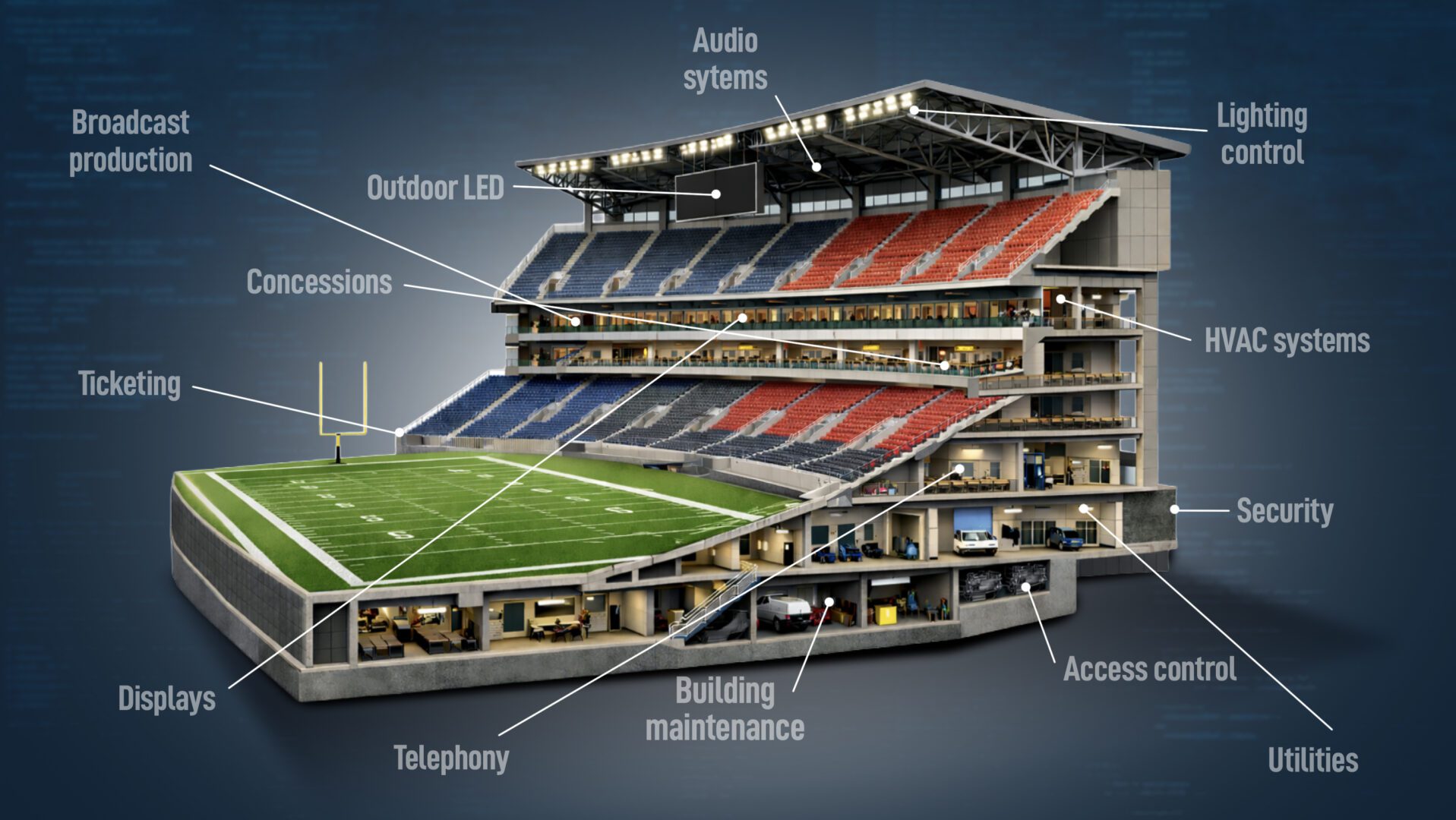
Stadium networks are no longer being built simply to keep fans connected. They are becoming the digital backbone for a rapidly expanding mix of cameras, sensors, building systems, retail platforms, security tools, and automated operations that now define the modern venue experience.
This shift reflects a broader technology transformation across commercial real estate and industrial operations. The internet is increasingly functioning as a machine-to-machine ecosystem, with billions of connected devices expected to come online by 2030. In stadiums, that means network demand is rising not only from spectators streaming video and sharing highlights, but from the infrastructure running the building itself.
For venue operators, the business implications are significant. More connected devices mean more data, more bandwidth pressure, greater security exposure, and deeper operational dependencies. What was once designed primarily for guest access is evolving into a mission-critical operating system for the entire venue.
The first major wave of this transformation came with high-density Wi-Fi. That era turned stadiums from places with limited connectivity into digital destinations capable of supporting tens of thousands of simultaneous fan connections. But even that model was still centered on people.
The next phase is different. Operational IoT is moving to the forefront, bringing building automation, security analytics, frictionless commerce, asset tracking, robotics, and predictive maintenance into the venue technology stack. These systems can improve efficiency and unlock new revenue opportunities, but they also add layers of complexity that many stadium networks were never designed to manage.
As these systems spread, many venues are likely to see endpoint counts rise sharply over the next decade. In practical terms, that means more devices competing for network resources and more pressure on operators to maintain uptime across systems that are increasingly interdependent. The result is a venue environment where network performance is directly tied to business performance.
The next wave may be even more disruptive. Ambient IoT — including ultra-low-power sensors, battery-free tags, wearable devices, and embedded intelligence — could push stadiums toward a far denser connected environment. At peak operating conditions, some venues could eventually support hundreds of thousands of endpoints, creating a level of digital complexity that rivals enterprise-scale industrial systems.
That scale changes the economics of stadium technology. Isolated networks for HVAC, lighting, security, broadcast, and operations may once have made sense as separate reliability layers. Today, they can also become fragmented silos that are expensive to manage and difficult to secure. The more systems a venue adds, the more important it becomes to coordinate them through a unified architecture.
This is why software-defined and converged network strategies are gaining momentum. Venue owners and operators need infrastructure that can segment traffic, scale dynamically, and support multiple operational priorities without forcing every system into its own technical silo.
For sports organizations, the disruption is clear: the stadium network is no longer a utility. It is a strategic asset. As connected devices multiply, the venues that treat network design as a core business decision — not just an IT function — will be better positioned to control costs, improve operations, and create new commercial value.
Why It Matters
Stadium connectivity is no longer just about keeping fans online. As venues absorb more cameras, sensors, security tools, retail systems, and automation platforms, the network is becoming the central infrastructure that powers both the guest experience and day-to-day operations. That shift is turning network strategy into a core business decision with major implications for revenue, efficiency, and risk.
Content Package
Stadium networks aren’t just for fan Wi‑Fi anymore. They’re becoming the digital backbone—running cameras, sensors, security, commerce, and building systems. Expect endpoint counts to explode. Are you ready?
#StadiumTech#SmartStadium#IoT#SDN#SportsTechnology
Stadium networks are entering a far more complex era. For years, venue connectivity was treated like a utility—high-density Wi‑Fi designed to keep fans online. But the modern stadium experience is no longer centered only on people streaming video and posting highlights. Networks are now evolving into the digital backbone that supports a growing mix of connected systems: • Cameras and analytics • Operational IoT (building automation, security analytics) • Frictionless commerce and retail tools • Asset tracking, robotics, and predictive maintenance • Security platforms and automated operations This shift mirrors a broader commercial real estate trend: the internet is increasingly a machine-to-machine ecosystem. With billions of connected devices expected to come online by 2030, stadium network demand is rising from both spectator traffic and the infrastructure that actually keeps the venue running. What’s at stake for operators is bigger than bandwidth. More endpoints mean: • Higher data and throughput pressure • Expanded security exposure • Greater operational dependencies • More uptime risk when systems are interdependent The next phase is operational IoT moving into the foreground—and it adds layers of complexity that many stadium networks were never designed to handle. Looking further ahead, ambient IoT (ultra-low-power, battery-free sensors, wearables, embedded intelligence) could push some venues toward hundreds of thousands of endpoints during peak operation—an environment that starts to resemble enterprise/industrial scale complexity. That scale changes the economics. Historically, isolated networks for HVAC, lighting, security, broadcast, and operations may have made sense as separate reliability layers. Today, they can also become fragmented silos—expensive to manage and harder to secure. The more systems a venue adds, the more critical it becomes to coordinate them through a unified architecture. That’s why software-defined and converged networking strategies are gaining urgency: infrastructure that can segment traffic, scale dynamically, and support multiple operational priorities without forcing every system into its own silo. Bottom line: the stadium network is no longer a background IT function. It’s a strategic asset. Organizations that treat network design as a core business decision—not just an IT requirement—will be better positioned to control costs, improve operations, and unlock new commercial value. What’s your venue’s biggest network challenge right now: endpoint growth, security, uptime, or architecture fragmentation?
#StadiumTech#SmartStadium#IoT#SDN#SportsTechnology
Stadium Wi‑Fi was the start. Now networks run cameras, security, IoT building systems, retail, and automation. Endpoint counts are climbing fast—so unified, software-defined architecture matters. ⚡🏟️ #StadiumTech #IoT #NetworkEngineering #SmartStadium #SportsTech #WiFi6 #SDN #Cybersecurity
#StadiumTech#SmartStadium#IoT#SDN#SportsTechnology
Stadium Tech Report: Stadium networks are moving beyond “fan Wi‑Fi” into a mission-critical digital backbone. As operational IoT, security analytics, and ambient sensors expand endpoint counts, venues need unified, software-defined networking to manage bandwidth, security, and uptime—because network performance is becoming directly tied to business performance.
#StadiumTech#SmartStadium#IoT#SDN#SportsTechnology
In the past, stadium networks were mostly about one thing: keeping fans connected. But now? Your stadium network is running the building. Cameras and analytics. Security platforms. Building automation. Frictionless retail. Asset tracking. Predictive maintenance. That means more endpoints, more bandwidth pressure, and more security risk—plus systems that depend on each other, so uptime becomes mission-critical. And the next wave—ambient IoT—could push venues toward hundreds of thousands of connected devices. So the question isn’t “Do we have Wi‑Fi?” It’s: do we have a unified, software-defined network strategy that can scale, segment traffic, and stay secure? That’s the far more complex era stadiums are entering—and it’s already here.
#StadiumTech#SmartStadium#IoT#SDN#SportsTechnology
Stadium networks used to be simple: high-density Wi‑Fi so fans could post and stream. Now the network is the digital backbone of the entire venue. It connects cameras and video analytics, security platforms, building automation, sensors, frictionless commerce, asset tracking, robotics, and predictive maintenance. That shift changes everything for operators: endpoint counts rise, bandwidth demand grows, security exposure increases, and uptime becomes tied to business performance. Next up is ambient IoT—ultra-low-power and battery-free sensors, wearables, embedded intelligence—potentially pushing stadiums toward enterprise-scale device density. So the real move is toward converged, software-defined architectures that can segment traffic, scale dynamically, and avoid siloed networks. Bottom line: the stadium network isn’t a utility anymore—it’s a strategic asset.
#StadiumTech#SmartStadium#IoT#SDN#SportsTechnology
Stadium networks aren’t just for Wi‑Fi anymore—they’re becoming the digital backbone for cameras, sensors, security, retail, and building automation. Next up: ambient IoT at enterprise scale. #StadiumTech
#StadiumTech#SportsTech#IoT
Stadium Wi‑Fi was step one. Now stadium networks are the venue’s “operating system”—powering IoT, security analytics, automation, commerce, and more. Converged, software-defined networks will decide uptime and cost. #StadiumTech
#StadiumTech#SportsTech#IoT#SDN#ConvergedNetworking
Stadium networks are no longer being built just to keep fans connected. They’re evolving into the digital backbone—and in many cases, the operational “operating system”—for modern venues. Today’s stadium is running on a growing mix of cameras, sensors, building systems, retail tools, security platforms, and automated operations. That shift reflects a broader technology trend: the internet is becoming a machine-to-machine ecosystem. What’s changed for operators is the business impact: 1) Bandwidth pressure isn’t the only issue anymore It’s not just tens of thousands of simultaneous fan connections. Endpoint counts are rising as operational IoT takes center stage—driving new requirements for uptime, performance, and capacity planning. 2) Security exposure grows with every connected system As networks become mission-critical for building operations, the attack surface expands. The network is now a dependency for security, analytics, and automated workflows. 3) Operational IoT introduces complexity The next phase moves beyond guest access into building automation, security analytics, frictionless commerce, asset tracking, robotics, and predictive maintenance. These systems can improve efficiency and unlock revenue—but they also require unified architecture and careful coordination. 4) The endpoint future could get extreme With ambient IoT—ultra-low-power sensors, battery-free tags, wearables, and embedded intelligence—some venues could eventually support hundreds of thousands of endpoints at peak. That level of connectivity resembles enterprise-scale industrial environments. 5) Fragmented networks become expensive and risky Historically isolated layers (HVAC, lighting, security, broadcast, operations) can turn into silos—harder to manage, harder to secure, and more costly to operate. The more systems you add, the more you need convergence. Why this matters now Software-defined and converged network strategies are gaining momentum because they enable segmentation, dynamic scaling, and support for multiple operational priorities—without forcing every system into its own technical silo. Bottom line: the stadium network is no longer a utility. It’s a strategic asset. The venues that treat network design as a core business decision (not just an IT function) will be better positioned to control costs, improve operations, and create measurable commercial value. — Stadium Tech Report
#StadiumTech#SportsTech#IoT#SDN#ConvergedNetworking
From Wi‑Fi to venue OS: today’s stadium networks power IoT, security analytics, automation, commerce + predictive maintenance. Converged, software-defined networks = scalable + secure operations. #StadiumTech #SportsTech #IoT #NetworkEngineering #SmartStadium #SDN #ConvergedNetworking
#StadiumTech#SportsTech#IoT#SDN#ConvergedNetworking
Stadium networks are evolving into the digital backbone of modern venues—supporting not only fan connectivity, but also operational IoT, security analytics, building automation, frictionless commerce, and predictive maintenance. As endpoint counts rise, network performance, uptime, and security become directly tied to business performance. The next wave: software-defined, converged architectures to coordinate everything from HVAC to robotics.
#StadiumTech#SportsTech#IoT#SDN#ConvergedNetworking
Stadiums aren’t just building Wi‑Fi anymore. Because the real upgrade is the network becoming the venue’s operating system. Here’s what that means: your stadium network now powers cameras, sensors, security analytics, building automation, retail tech, asset tracking—and even predictive maintenance. So bandwidth isn’t the only challenge. You also need tighter security, higher uptime, and a way to connect lots of devices without turning the infrastructure into messy silos. That’s why software-defined and converged networks are gaining momentum. In short: the stadium network is now a strategic asset—because it’s running the venue, not just the fans.
#StadiumTech#SportsTech#IoT#SDN#ConvergedNetworking
Stadium Wi‑Fi used to be the headline. Now the stadium network is becoming the venue’s “operating system.” Why? Because modern stadiums are packed with connected tech: cameras, sensors, security platforms, building automation, frictionless commerce, asset tracking, and predictive maintenance. That means more endpoints, more bandwidth demand, and—most importantly—more operational dependencies. If the network struggles, operations struggle. The next phase could be even bigger with ambient IoT—ultra-low-power sensors and battery-free tags—potentially pushing venues toward enterprise-level scale. So what’s the solution? Converged, software-defined networking that can segment traffic, scale dynamically, and keep systems coordinated without security and management silos. Bottom line: treat the network like a strategic asset, not just an IT utility.
#StadiumTech#SportsTech#IoT#SDN#ConvergedNetworking
Stadium networks are shifting from “fan connectivity” to the digital backbone of modern venues. What used to be a guest-access Wi‑Fi layer is evolving into the operating system that coordinates cameras, sensors, building automation, security analytics, frictionless commerce, asset tracking, and even robotics and predictive maintenance. Why this matters now: - **Endpoint counts are rising fast**: Spectator streaming is only part of the demand. Operational IoT turns the building itself into a connected environment. - **Network performance becomes business performance**: More devices mean more bandwidth pressure, more security exposure, and more operational dependencies—so uptime directly impacts revenue and guest experience. - **Fragmented networks are becoming costly**: Keeping HVAC, lighting, security, broadcast, and operations isolated can create silos that are expensive to manage and harder to secure. - **Converged + software-defined architectures are the answer**: These approaches enable traffic segmentation, dynamic scaling, and coordinated priorities without forcing every system into its own technical island. The next wave could be even more disruptive: **ambient IoT** (ultra-low-power sensors, battery-free tags, wearables, embedded intelligence) could push some venues toward **hundreds of thousands of endpoints**, rivaling enterprise-scale industrial complexity. For sports organizations and venue operators, the takeaway is clear: the stadium network is no longer a utility. It’s a strategic asset. Those treating network design as a core business decision—not just an IT function—will be best positioned to control costs, improve operations, and unlock new commercial value. #StadiumTech #SportsTech #IoT #Networking #VenueOperations
#StadiumTech#SportsTech#IoT
Stadium Wi‑Fi era = over. 📡 Now networks run the *whole* venue: cameras, sensors, security, retail, automation & predictive maintenance. Next wave? Ambient IoT + massive endpoint density. 🏟️✨ #StadiumTech #SportsTech #IoT #SmartStadium #NetworkEngineering #EdgeComputing #Automation #Cybersecurity
#StadiumTech#SportsTech#IoT
Stadium networks are becoming the “operating system” of modern venues. It’s no longer just about keeping fans online—networks now support cameras, sensors, building automation, security analytics, and automated operations. As connected devices multiply, network performance and uptime will directly impact business results, making converged and software-defined strategies increasingly important.
#StadiumTech#SportsTech#IoT
Stadiums used to build networks for one job: keep fans connected. 📶 But now? The network is running the whole venue. Cameras. Sensors. Security analytics. Retail payments. Building automation. Even predictive maintenance. And here’s the shift: it’s becoming mission-critical. More devices = more bandwidth pressure, more security exposure, and more operational dependencies. Next phase is ambient IoT—ultra-low-power sensors and battery-free tags—potentially pushing venues toward hundreds of thousands of endpoints. So the big question for operators: is your network just a utility… or your venue’s operating system? 🏟️
#StadiumTech#SportsTech#IoT
Stadium networks aren’t just “Wi‑Fi for fans” anymore. 📶 They’re becoming the digital backbone of the entire venue—connecting cameras, sensors, security systems, retail tools, and building automation. Why the change? Because the internet is shifting toward machine-to-machine ecosystems, and stadiums are adding layers of operational IoT. That means more endpoints, more bandwidth demand, and bigger security stakes. And it also means network performance becomes directly tied to business performance—uptime, safety, and guest experience. The next wave could be ambient IoT, with ultra-low-power sensors and battery-free tags—at potentially enterprise-scale device counts. Bottom line: treat the stadium network as a strategic asset, not an IT afterthought. 🏟️
#StadiumTech#SportsTech#IoT
Stadium Wi-Fi was step one. Now stadium networks are becoming the digital backbone—running cameras, IoT sensors, security analytics, retail and automation. Treat it as a strategic asset, not an IT afterthought. #StadiumTech
#StadiumTech#SmartStadium#IoT#NetworkInfrastructure#SportsBusiness
Stadium networks aren’t being built just to keep fans online anymore. They’re evolving into the digital backbone—and, increasingly, the “operating system”—for modern venues. What changed? - The connectivity wave started with high-density Wi-Fi, enabling tens of thousands of simultaneous fan connections. - The next phase is operational IoT: building automation, security analytics, frictionless commerce, asset tracking, robotics, and predictive maintenance. - Ambient IoT may push density even higher—potentially hundreds of thousands of endpoints in peak conditions. Why it matters for venue operators More connected devices means more than higher bandwidth demand. It creates: - Greater data volume and operational complexity - Expanded security exposure - Tighter dependencies across building systems - A direct link between network performance and business performance (uptime, safety, and revenue) This is also where the economics shift. Historically “isolated” networks for HVAC, lighting, security, broadcast, and operations can turn into fragmented silos—harder to manage and more difficult to secure. The more systems you add, the more you need a unified architecture. That’s driving momentum behind software-defined and converged networking strategies—networks that can: - Segment traffic effectively - Scale dynamically - Support multiple operational priorities without forcing every system into a separate silo Bottom line: the stadium network is no longer a utility. It’s a strategic asset. Organizations that treat network design as a core business decision will be better positioned to control costs, improve operations, and unlock new commercial value. #StadiumTech #IoT #NetworkInfrastructure #SportsBusiness #SmartVenues
#StadiumTech#SmartStadium#IoT#NetworkInfrastructure#SportsBusiness
Stadium networks = the new “operating system.” 📡 From high-density Wi‑Fi to operational + ambient IoT—cameras, sensors, security, commerce, automation. Built for scale, reliability, and revenue. #StadiumTech #SmartStadium #IoT #Wireless #NetworkSecurity #SportsTech #VenueOps
#StadiumTech#SmartStadium#IoT#NetworkInfrastructure#SportsBusiness
Stadium networks are evolving fast. What began as high-density Wi‑Fi for fans is now becoming the digital backbone for cameras, sensors, security analytics, retail tech, and automated venue operations. With operational IoT (and possibly ambient IoT) driving endpoint counts higher, network performance is increasingly tied to uptime, safety, and revenue. For venue operators, the takeaway: treat the network as mission-critical infrastructure—not just an IT utility.
#StadiumTech#SmartStadium#IoT#NetworkInfrastructure#SportsBusiness
In the past, stadium networks were built for one thing: keep fans connected. Now? They’re running the whole venue. As IoT expands, networks power cameras, security analytics, building automation, frictionless payments, asset tracking, even predictive maintenance. That means more devices, more data, and more security risk—plus tighter dependencies between systems. So the real question isn’t “Do we have Wi‑Fi?” It’s: can your network scale, segment traffic, and stay secure as the stadium becomes a machine-to-machine environment? Because in modern venues, the network isn’t a utility—it’s the operating system.
#StadiumTech#SmartStadium#IoT#NetworkInfrastructure#SportsBusiness
Stadium Wi‑Fi was the first upgrade. But today’s stadium network is becoming the operating system for the entire venue. Here’s why: connected cameras, sensors, security analytics, building automation, retail platforms, and predictive maintenance all depend on the network. More endpoints mean more bandwidth pressure, more data, and more security exposure. And it gets bigger—ambient IoT could push endpoint counts dramatically higher, creating enterprise-level complexity. So venues need converged, software-defined architectures that can segment traffic, scale dynamically, and coordinate systems without creating silos. Bottom line: treat the stadium network as strategic infrastructure, not just an IT cost.
#StadiumTech#SmartStadium#IoT#NetworkInfrastructure#SportsBusiness
Stadium networks aren’t just for fans anymore—they’re becoming the venue’s digital operating system. With IoT, cameras, sensors, and automation multiplying, network design is now a core business decision. #StadiumTech
#StadiumTech#SportsTech#IoT
Stadium Tech Report: Stadium networks are becoming the operating system of the modern venue. What changed? The network is no longer built primarily to keep fans connected. It’s evolving into the digital backbone that supports a growing mix of connected cameras, sensors, building systems, retail platforms, security tools, and automated operations. This shift mirrors a broader transformation in commercial real estate and industrial operations: the internet is increasingly functioning as a machine-to-machine ecosystem. In stadiums, that means network demand is rising from both sides of the experience—spectators streaming and sharing, and the infrastructure running the building itself. Key implications for venue operators: - Higher endpoint counts and bandwidth pressure - Expanded security exposure - Deeper operational dependencies (uptime across interdependent systems) - Network performance tied directly to business performance We’ve already seen the first wave with high-density Wi-Fi—turning venues into digital destinations. But the next phase is different: operational IoT is moving to the forefront. Building automation, security analytics, frictionless commerce, asset tracking, robotics, and predictive maintenance all add value, but also introduce complexity many legacy stadium networks weren’t designed to manage. Looking ahead, ambient IoT could push endpoint density dramatically higher—potentially hundreds of thousands of connected endpoints at peak. That scale changes the economics of venue tech: isolated networks for HVAC, lighting, security, broadcast, and operations can become fragmented silos—harder to secure and expensive to maintain. That’s why software-defined and converged network strategies are gaining momentum. Venue owners and operators need architectures that can: - Segment traffic and prioritize operational needs - Scale dynamically - Avoid siloed infrastructure while improving reliability and security Bottom line for sports organizations: the stadium network is no longer a utility. It’s a strategic asset. Treating network design as a core business decision—rather than an IT-only function—will help control costs, improve operations, and unlock new commercial value.
#StadiumTech#SportsTech#IoT
Stadiums are going beyond Wi‑Fi 📡➡️ networks are becoming the DIGITAL OS powering cameras, sensors, security + automation. Next up: ambient IoT + massive endpoint density. Are you ready? #StadiumTech #SportsTech #IoT #NetworkEngineering #SmartStadium #VenueOps #CyberSecurity #SDN #ConvergedNetworks
#StadiumTech#SportsTech#IoT
Stadium networks are evolving fast. According to Stadium Tech Report, they’re shifting from fan connectivity to a mission-critical digital backbone for cameras, sensors, security, retail and building automation. With operational IoT and potentially ambient IoT ahead, network performance and reliability will directly impact venue operations and business outcomes.
#StadiumTech#SportsTech#IoT
Stadiums used to build networks for one thing: keeping fans online. But now? The network runs the whole venue. Cameras, sensors, security analytics, building automation, even predictive maintenance—all depend on the same connected infrastructure. And the endpoint count is only going up. Next phase: operational IoT, and maybe ambient IoT with ultra-low-power, battery-free devices. That means more bandwidth pressure, more security risk, and more uptime challenges. So here’s the takeaway: the stadium network is no longer a utility—it’s the venue’s digital operating system. Treat it like a strategic asset, not just IT plumbing.
#StadiumTech#SportsTech#IoT
Stadium networks aren’t just for Wi‑Fi anymore. Today’s venues run on connected systems: cameras, sensors, security tools, building automation, retail tech, and automated operations. That means the network becomes the venue’s digital operating system. And it’s getting bigger. Operational IoT is moving to the forefront—adding frictionless commerce, asset tracking, robotics, and predictive maintenance. More devices mean more bandwidth pressure, more security exposure, and higher stakes for uptime. Looking ahead, ambient IoT could massively increase endpoint density—potentially hundreds of thousands of connected devices. So the real question: is your stadium network built to scale, segment traffic, and stay secure as operations become more interdependent? Because network performance is now business performance.
#StadiumTech#SportsTech#IoT