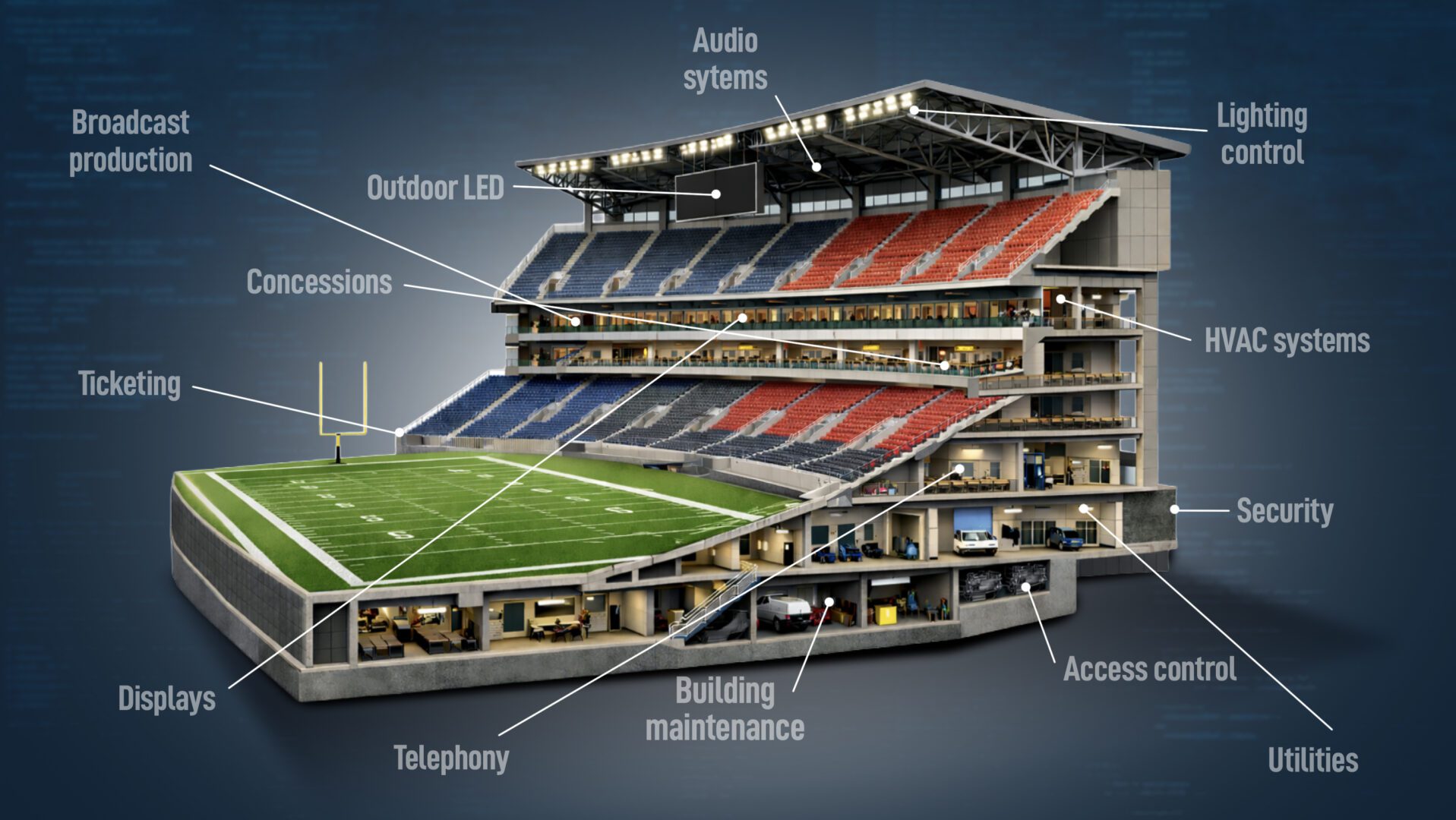
Stadium Tech and Venue Investment Signal a New Era of Sports Monetization
From AI-assisted officiating to premium club builds and major stadium redevelopments, the latest wave of venue and event innovation shows how sports properties are turning infrastructure into a revenue engine. Teams, leagues, and cities are increasingly using technology, hospitality, and real estate strategy to deepen fan engagement, unlock new commercial inventory, and future-proof their assets.
STADIUM TECHNOLOGY NEWS
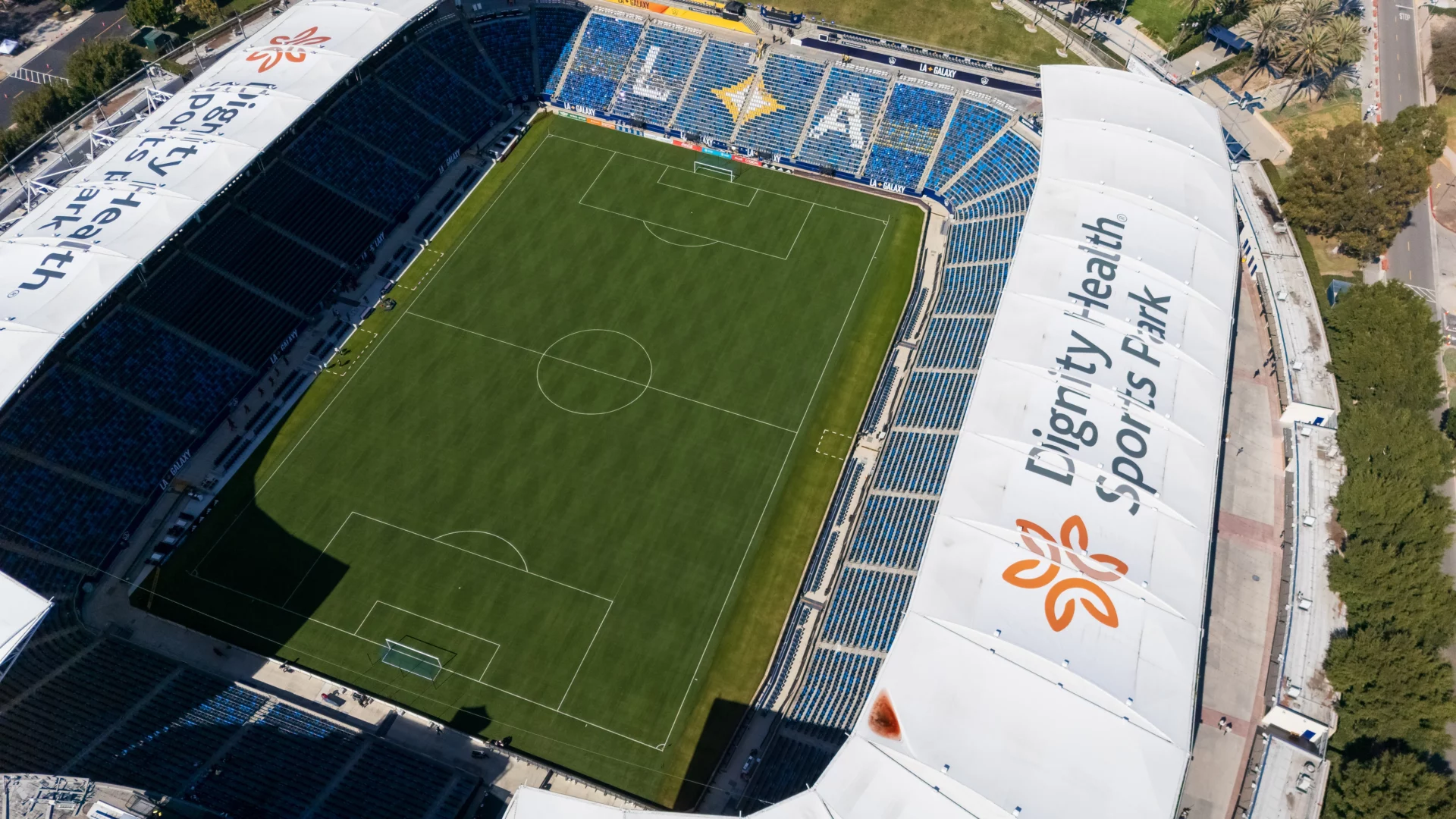
Dignity Health Sports Park upgrades LED display and show control system to enhance matchday production
Dignity Health Sports Park has installed a higher-resolution north-end LED video board and a venue-wide Show Control with Camino upgrade, modernizing game-day production for LA Galaxy matches and more than 70 annual events. Beyond improving visual clarity and live data presentation, the refresh reuses existing display infrastructure, reducing material waste while improving operational efficiency and giving the venue a more flexible content platform for sponsors, fans, and event operators.
MatSing to debut new high-capacity Wi-Fi 6E Lens Antenna at MWC in Barcelona
MatSing is set to introduce its MS-16.16W45 WiFi Antenna at MWC Barcelona, targeting high-density environments such as stadiums and arenas. The pitch is straightforward but disruptive: deliver stronger Wi-Fi 6E performance with fewer antennas, lowering infrastructure costs while increasing capacity for data-heavy fan experiences, venue operations, and future monetization tied to connectivity.
MLB’s Automated Ball-Strike system forces a major shift in broadcast and game technology
Major League Baseball will launch its Automated Ball-Strike challenge system for the 2026 season, allowing pitchers, catchers, and batters to contest umpire calls using camera-tracked strike-zone technology. The rollout is changing more than officiating; it is forcing broadcasters and venue operators to redesign graphics and display workflows so strike-zone visuals do not become a competitive advantage, underscoring how technology adoption can ripple across the entire sports business ecosystem.
STADIUM PROJECT NEWS
Indiana takes major legislative step in bid to lure Chicago Bears across state line
Indiana lawmakers unanimously approved an amendment creating a stadium authority that could finance and build a new NFL venue near Hammond, intensifying the regional competition to attract the Chicago Bears. The move highlights how public policy, infrastructure financing, and franchise leverage are increasingly intertwined, with states willing to compete aggressively for the economic impact and prestige tied to an NFL relocation.
Mets break ground on $60M player development complex in Port St. Lucie
The New York Mets have started construction on a 55,000-square-foot player development complex in Port St. Lucie, representing a roughly $60 million investment in training, performance, and recovery infrastructure. The project replaces an aging clubhouse and reinforces the club’s long-term Florida strategy, with a lease extension that could keep the organization anchored there through 2052.
Medellín advances $205M modernization of Atanasio Girardot Stadium
Medellín has approved a US$205 million redevelopment of Atanasio Girardot Stadium, transforming the 1953 venue into a more modern, multi-use sports asset. The plan includes a full roof, expanded capacity approaching 60,000 seats, upgraded hospitality, and improvements to surrounding public space, positioning the stadium as a candidate for larger international events and broader urban economic activity.
STADIUM BUSINESS NEWS
Kansas adds year-round premium social club inside historic Allen Fieldhouse
The University of Kansas and Oak View Group will open the members-only Naismith Club inside Allen Fieldhouse in summer 2026, turning the iconic basketball arena into a year-round hospitality destination. The concept expands premium inventory beyond game nights, creating additional revenue opportunities through dining, lounge access, and private events while strengthening alumni engagement and venue utilization.
Chicago Fire FC opens $6M Experience Center to drive premium sales ahead of new stadium
Chicago Fire FC has unveiled a $6 million stadium experience center designed to showcase premium seating, hospitality offerings, and technology concepts tied to its planned 22,000-seat downtown venue. The center functions as a commercial engine, giving prospective buyers and partners a tangible preview of the future stadium experience while helping the club accelerate sales ahead of its 2028 opening target.
LAFC–Inter Miami Match draws second-largest crowd in MLS history
LAFC’s February 22, 2026 matchup against Inter Miami at the Los Angeles Memorial Coliseum drew 75,673 fans, making it the second-largest crowd in MLS history. The turnout reinforces the league’s growing ability to package marquee matchups as destination events, where star power and venue scale combine to create major-ticket, major-media opportunities beyond traditional soccer inventory.
Why It Matters
From AI-assisted officiating to premium club builds and major stadium redevelopments, the latest wave of venue and event innovation shows how sports properties are turning infrastructure into a revenue engine. Teams, leagues, and cities are increasingly using technology, hospitality, and real estate strategy to deepen fan engagement, unlock new commercial inventory, and future-proof their assets.
Content Package
Stadium tech is reshaping sports revenue: LA Galaxy upgrades LED + show control, Wi‑Fi 6E boosts fan connectivity, MLB’s automated strike system changes broadcast workflows—while new venues and premium clubs expand monetization.
#StadiumTech#SportsBusiness#VenueInnovation#FanExperience#WiFi6E#SportsMarketing
Stadium Tech and Venue Investment are converging into a new era of sports monetization—where matchday production, connectivity, and premium hospitality are becoming revenue platforms, not just “amenities.” Here’s what’s signaling the shift: 1) Game-day tech upgrades = better experiences + smarter operations Dignity Health Sports Park’s higher-resolution north-end LED board and venue-wide Show Control with Camino upgrade modernize LA Galaxy matchday production for 70+ annual events. The key takeaway isn’t only clearer visuals and live data—it’s reuse of existing infrastructure to reduce waste while increasing operational flexibility. That means sponsors and event operators get a more adaptable content layer without starting from scratch. 2) Connectivity is becoming a monetization lever MatSing’s upcoming Wi‑Fi 6E Lens Antenna for high-density venues targets stadium/arena environments with fewer antennas and stronger performance. More capacity for data-heavy fan experiences and venue operations translates directly into future monetization opportunities tied to connectivity—especially as leagues and teams look to activate personalization, ticketing, and in-stadium engagement. 3) Tech adoption ripples across the entire ecosystem MLB’s Automated Ball-Strike challenge system (2026) goes beyond officiating. It forces changes to broadcast and display workflows so strike-zone visuals don’t become a competitive advantage. That’s a reminder: when sports adopt new tracking and camera-driven tools, the entire production stack—graphics, overlays, and venue workflows—must evolve. 4) Venue investment continues—paired with premium inventory expansion On the project side, Indiana’s stadium authority proposal shows how aggressively states are competing for franchise economic impact. Meanwhile, the Mets’ ~$60M player development complex and Medellín’s $205M modernization of Atanasio Girardot Stadium highlight continued capital investment to build multi-use, event-ready assets. 5) Premium clubs and experience centers extend revenue beyond game nights Kansas and Oak View Group’s Naismith Club (opening summer 2026) turns Allen Fieldhouse into a year-round hospitality destination. Chicago Fire FC’s $6M Experience Center is another “commercial engine,” giving premium buyers a tangible preview of the future downtown venue experience. 6) Marquee matchups are increasingly treated as destination media events The LAFC–Inter Miami draw (75,673 fans) underscores how star power + venue scale = major-ticket, major-media opportunities. It’s a blueprint for packaging events as experiences that extend monetization beyond traditional inventory. Bottom line: the next growth wave in sports business won’t come from a single upgrade—it will come from integrated investment across production tech, connectivity, premium hospitality, and venue strategy. What’s your view: which of these—LED/show control, Wi‑Fi 6E, automated officiating tech, or premium hospitality—will drive the biggest ROI first?
#StadiumTech#SportsBusiness#VenueInnovation#FanExperience#WiFi6E#SportsMarketing
Stadiums are leveling up fast: upgraded LED + show control 🎥⚡ Wi‑Fi 6E for high-density capacity 📶 MLB automated strike tech changes broadcast workflows ⚾🏟️ Plus new premium clubs + experience centers = more revenue beyond game day. #StadiumTech #SportsBusiness #VenueInnovation #WiFi6E #LED #MLS #NFL #MLB #FanExperience #SportsMarketing
#StadiumTech#SportsBusiness#VenueInnovation#FanExperience#WiFi6E#SportsMarketing
Sports monetization is entering a new era. From LA Galaxy’s LED and show control upgrades to MatSing’s Wi‑Fi 6E antenna debut for stadium connectivity, venues are investing in technology that improves the fan experience and expands sponsor opportunities. Meanwhile, MLB’s automated ball-strike system is reshaping broadcast and display workflows, and major stadium projects plus premium clubs are extending revenue beyond game day. What upgrade do you think will pay off first?
#StadiumTech#SportsBusiness#VenueInnovation#FanExperience#WiFi6E#SportsMarketing
In 35 seconds, here’s what’s changing sports monetization. 1) LA Galaxy upgraded stadium production—higher-res LED and a full show control system—so sponsors and events can get more flexible content without extra waste. 2) MatSing is bringing Wi‑Fi 6E stadium tech to boost capacity in high-density crowds—meaning better fan experiences and new connectivity-based revenue. 3) MLB’s automated ball-strike challenge launches in 2026—forcing broadcasters and venues to redesign strike-zone visuals and workflows. 4) Meanwhile, teams are building premium ecosystems: new clubs, experience centers, and massive venue redevelopments. Bottom line: tech + premium hospitality = revenue beyond game day. Follow for more Stadium Tech Report updates!
#StadiumTech#SportsBusiness#VenueInnovation#FanExperience#WiFi6E#SportsMarketing
Stadiums are becoming revenue machines—here’s the proof in under a minute. LA Galaxy’s venue upgrades: higher-resolution LED + show control for clearer matchday production and more flexible sponsor/fan content. MatSing’s Wi‑Fi 6E Lens Antenna: fewer antennas, stronger performance, and more capacity for data-heavy fan experiences—opening the door to connectivity monetization. MLB’s Automated Ball-Strike system: not just officiating—broadcast and display workflows must change so strike-zone visuals don’t create a competitive edge. Then we see the business side: premium clubs and experience centers turning arenas into year-round hospitality destinations, plus major stadium investments. Tech, connectivity, and premium inventory are converging. That’s the new era.
#StadiumTech#SportsBusiness#VenueInnovation#FanExperience#WiFi6E#SportsMarketing